Colon Cancer at 45: Elizabeth’s Message for Anyone Putting Off Screening
March 19, 2026-(1).jpg)
When Elizabeth Tullos looks back now, she can see the signs—small, subtle and easy to dismiss. “Looking back there were symptoms that I attributed to hormonal changes. I had also recently gained weight and had been getting very fatigued.” Nothing pointed clearly to colon cancer. “There was really no one thing that made me consider that it could be colon cancer.”
Elizabeth’s diagnosis didn’t come from a routine screening or a planned doctor’s visit. As an employee at Saint Mary’s, she found herself suddenly on the other side of care—arriving at the ER with severe abdominal pain that led to emergency surgery. During surgery, a tumor was discovered in her colon.
The Moment Everything Changed
Hearing the words “colon cancer” is something no one is ever prepared for. “It was definitely a shock, and I don't think I really comprehended what the doctor was telling me.” But the hardest part wasn’t the diagnosis itself—it was sharing it. “Sharing the news with my children and parents was the hardest part.”
Life after cancer doesn’t snap back into place. Elizabeth shared, “Someone told me that you never really get back to normal, and I wholeheartedly agree. I still have apprehension with each doctor's appointment.”
A Journey of Treatment, Discovery and Courage
Her surgery brought a glimmer of relief. “The pathology report showed clear margins which means that all of the diseased tissue had been removed.” After meeting with her oncologist and undergoing further testing, Elizabeth learned that “active monitoring was enough, and no chemo or immunotherapy was necessary at that point.”
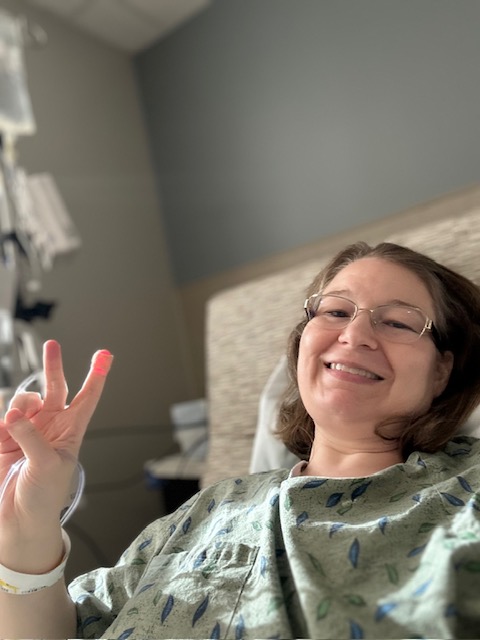
But the journey wasn’t over. “During my first surgery I was given a temporary colostomy to let my colon heal.” Then came another unexpected discovery: “Genetic testing showed that I have a condition called Lynch Syndrome which increases my risk for various types of cancer.” Because of this—and a family history of ovarian cancer—Elizabeth made a brave, proactive decision. “I opted to undergo an additional preventative surgery at the same time as my colostomy reversal.”
What She Wants Others to Know
Her message is clear: colon cancer is not just a disease of the elderly. According to the American Cancer Society, adults under 55 now make up nearly 1 in 5 new colorectal cancer cases—almost double the proportion in the mid‑1990s. Screening guidelines have evolved to reflect this trend, with routine screening now recommended starting at age 45, or earlier for those at higher risk.
Elizabeth was 45, and she wants others to learn from her experience. “I put off scheduling my colonoscopy because I thought I was too busy with work and life, and honestly, I didn't think that something like this would happen to me. If I had gotten my screening earlier in the year, the tumor would still have been found, but I likely would have gone through less emotional and physical trauma.”
For Anyone Who Feels ‘Too Young’ or Too Afraid
Her advice is simple, honest and grounded in lived experience. “Colonoscopies are not as scary as everyone imagines. I have had three in the last year.” Because of Lynch Syndrome, she will continue to have one every year. “I have learned all the tips and tricks to get through the prep. I hope that sharing my story will encourage others to get screened.”
It Takes a Village
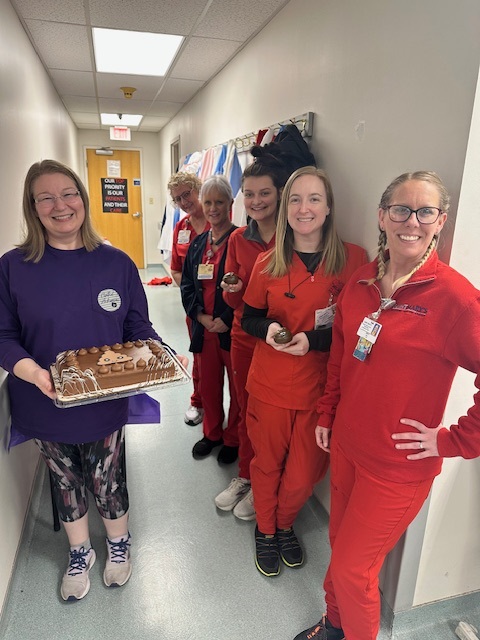
Elizabeth didn’t walk this road alone. She carries deep gratitude for the people who stood beside her—professionally, medically and emotionally. “I wanted to say a huge thank you to Amanda, Angie and my other coworkers in the lab (who literally saved my life), Dr. Johnson and his nurse Brittney, Dr. Nelson and his nurse Philisa and the rest of my Saint Mary's family for their support over the last year and a half.”
Early detection saves lives. Ask your provider if it’s time for your screening and which option is right for you.